Thanks all for such a refreshing discussion!
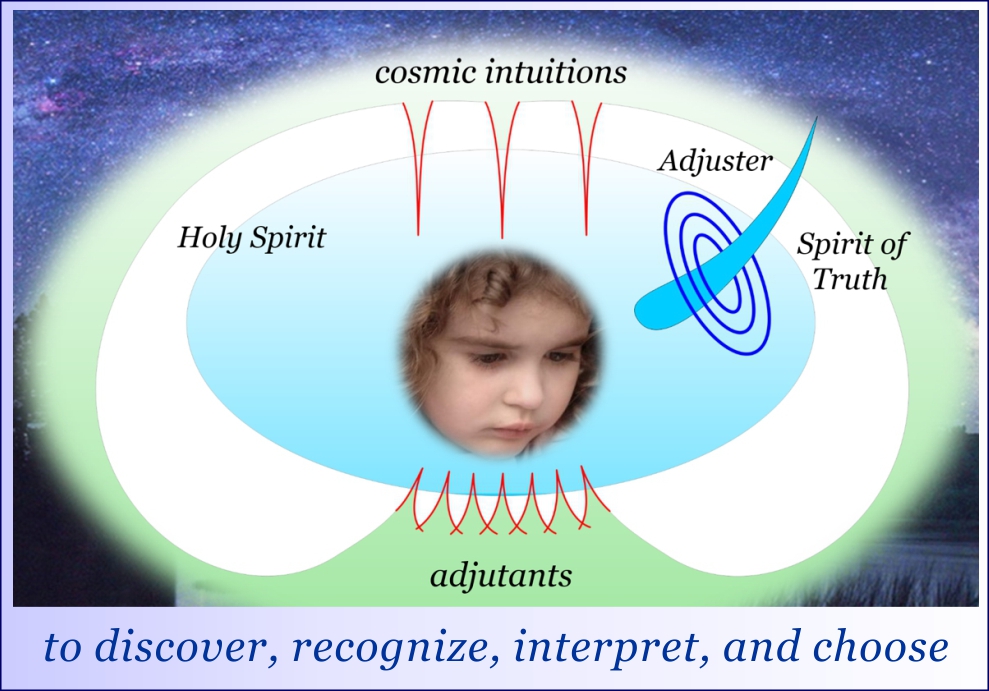
This thread was actually intended to be about how we, as individuals, experience the three cosmic intuitions, and the cultural repercussions that flow from this interaction. But I did raise the “f” word (fact), so first I’ll try to clear the air.
Bonita wrote:
“I don’t see how that jives with your examples of fact at the beginning of your post. Are you saying that just asking those questions, imagining those thoughts about being picked on, just pondering ideas in the mind, is enough to make them actual or factual?”
Sorry if I created that confusion. The fact that they are picking on me implies a chain of choice and causation that led to their action. Now, while there may be absolutely no way for ME to know much about this background, both the Divine Minister and Michael are completely aware of all the facts of the matter. Thus the context is coloured by all the facts of the attacker’s life.
But here’s the thing: while I may have certain beliefs or assumptions about this fellow’s background, I believe the three cosmic intuitions help each of us to avoid becoming subject to such a priori beliefs or assumptions. This is a subtle interaction, and what happens next has the undiluted attention of the Supreme…
Bonita asks:
“So, how is it that you can tell if your thinking is fact or fiction, or figment, as you call it?”
As I understand it, these three insights of the cosmic mind, these 3 forms of the cosmic discrimination, these 3 cosmic intuitions, make it possible for those who “take delight in cultivating these qualities of courageous and independent cosmic thinking” to discern “fact from figment”. The challenge for humans is that our mind arena of choice is necessarily loaded with assumptions. But as someone once said, courageous and independent thinkers can entertain ideas, or assumptions, without subscribing to them 
On the question of assumptions, in 16:6 the author puts two types side by side. First the valuable kind:
“… these three insights of the cosmic mind constitute the a priori assumptions which make it possible for man to function as … “ (192.6, 16:6.10)
And then the retarding type:
“… which saves them from becoming helpless victims of the implied a priori assumptions of science, philosophy, and religion.” (191.7 16:6.4)
* * *
Bonita wrote:
“The eye of the material mind perceives a world of factual knowledge;”
Here, are they not simply referring to certain measureable facts of the material domain? The idea I’m exploring is that each domain has its characteristic “facts” (actuals, reals). For example, consider the fact that meanings and values can be experienced.
Bonita wrote:
“I don’t see how that jives with your examples of fact at the beginning of your post.”
Sorry, don’t get hung up on those. I was simply thinking out loud about what you described as a “moral” problem. In that situation, while we must choose some response, and while that response will reflect our present accumulation of wisdom and moral values, I could not help but see the same situation from our parents’ point of view. They know all the facts and experiences that have shaped and coloured the private inner world of the “attacker”, who after all is one of their DEEPLY beloved children!
Bonita asked:
“but what is it that makes a fact actual?”
Good question. Where’s philosopher Todd when we need him?! Before meeting the Urantia Book, I got hung up on the unshakeable notion that “there is a way that things are”. This applied to both material and non-material domains.
“ There is a way that things are. ” There is a relationship between Paradise and the cosmos; we are discovering endless facts about this. There’s also a relationship between the Creator of reality and every personal creature; think of the facts surrounding this more numinous state of things!
The word fact derives from the Latin for something made or done (see facio, “I make/do/act”, etc.). Thus for me, “fact” is not the colloquial shorthand, but a vast concept package that illuminates the actuals and interactions in all four domains of reality. Think of the four absolute sources and centres, and how their characteristic gravities identify and distinguish the factual actuals of each domain…
Bonita asked:
“What’s the relationship between wisdom and facts?”
Touching the heart of the matter! By helping us to discern fact from figment, the three cosmic intuitions, mediated by the Divine Minister, help us set up the sort of private inner world in which Living Truth can teach wisdom. But such one-on-one tutorials with Deity require us continually to enhance our discernment of actuals, then to discover and understand relationships between those factual actuals, which increasingly we can discern.
“But for the life of me I cannot see where the supermind function of the Holy Spirit is based upon fact or reveals facts or gives meaning to facts.”
Indeed. That aspect of her service would relate to how she mediates the cosmic intuitions, not how she serves as “Holy Spirit”. Recall that the Divine Minister wears many hats. Think about her early role as material energy manipulator, and the way she still looks after the plumbing and wiring of Nebadon. The fact that she does all these things means that Michael is not distracted from serving as the “personification of truth in the local universe.” (377.9, 34:4.5)
For those still following along, thanks for persevering! This hard slog through a landscape of concepts makes me wonder, are we here engaged with the business of learning to take delight in cultivating ? 
Nigel