


Where the Bones Lie Buried

Urantia Foundation board room, Chicago.
My provisional title for this essay was “A Perfect Storm,” but I ended up rejecting that for two reasons that I find cogent and convincing: (1) there is nothing in this story that is perfect in a substantive sense; and (2) the events in question were not the onset of a storm during which lightning and thunder suddenly burst forth on some afternoon or evening. To the contrary, we are analyzing an extended process that encompassed many layers of meaning, strands that were disparate, interlocking, and interwoven.
The requirement for analytical coherence and clarity compels me to describe each factor individually, arranging them in an order that seems logical. On the other hand, this standard approach to analysis tends to imply that the tumultuous events of the summer of 1989 were preordained and inevitable in the ways they unfolded. Not so, even though it is reasonable to believe that certain structural factors had effectively guaranteed that there would be a crisis at some moment—some series of unpredictable events that would compel Urantia Foundation to revise its policies and chart new paths.
Intermingling and overlap
The pattern of activities that occurred during the 1950s and 1960s appears to indicate that the great majority of early leaders had roots in the Forum and knew each other well, sharing a common commitment to the fifth epochal revelation that tended to blur the functional differences that distinguished Urantia Foundation from Urantia Brotherhood. This undoubtedly seemed natural to them at the time, for they trusted each other. In the long run, however, this intermingling and overlap—patterns that often involved individuals moving back and forth from one organization to the other—tended to undermine the healthy principle that I shall paraphrase as “stay in your lane.”
In other words, the Trustees of Urantia Foundation often believed that the work of Urantia Brotherhood was their work too, and the leaders of Urantia Brotherhood tended to imagine that they should have a voice in how Urantia Foundation operated. These mutual illusions, although partly natural, were counterproductive and dangerous. Managerial responsibilities and social activities are distinct and must remain separate.
Management decisions that were profoundly unwise
At some point that may have predated my active personal interest in the fifth epochal revelation (from November 1973 onward), the Trustees of Urantia Foundation made two management decisions that were profoundly unwise—decisions that ultimately proved to be catastrophic. In effect, the Trustees abandoned crucial responsibilities of the Foundation, assigning them to the Brotherhood instead. Urantia Brotherhood thereby became:
- The exclusive agent for selling, marketing, and promoting The Urantia Book; and also
- The exclusive agent for raising funds for both organizations.
If we interpret these decisions in colloquial terms, they meant that the Foundation placed all its eggs in someone else’s basket (i.e., the Brotherhood’s). Since the Foundation’s very existence was at stake, the Trustees were compelled to watch that basket with intense attention, scrutinizing everything the Brotherhood did and intervening energetically against adoption of any action or approach that seemed likely to have adverse effects.
This practical necessity set up a psychology of surveillance and implicit subordination that, in the long run, the leaders of Urantia Brotherhood were likely to find invasive or even offensive—perhaps sufficiently so that they would eventually decide to rebel. In essence, this is what happened in the summer of 1989.
Concentration of power
Here I am referring to structural defects of the original constitution of Urantia Brotherhood, the fact that it failed to divide authority sufficiently, embody appropriate checks and balances, and ensure respect for pluralism and diversity. In effect, the Brotherhood’s constitution enabled a small elite to entrench itself in the Executive Committee and exercise power in ways that were essentially autocratic, without being obliged to obtain the General Council’s approval in important matters—much less the consent of a majority of the members of the Brotherhood. When the leaders of the Executive Committee decided to challenge and confront Urantia Foundation in the summer of 1989, there was no way for anyone else in the Brotherhood to prevent that, nor even to counsel prudence and caution.
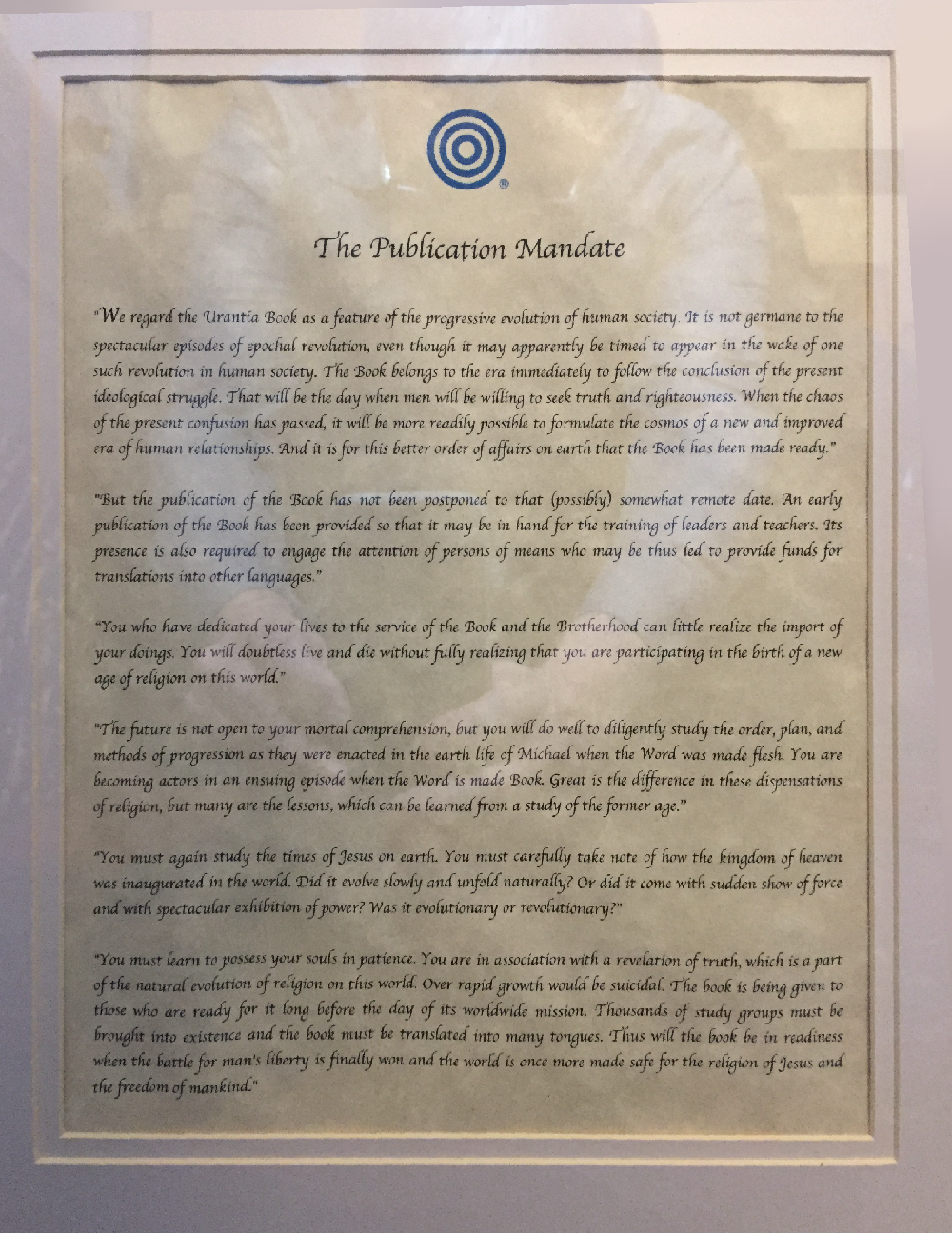
In contrast, Urantia Foundation is essentially a proprietary structure for owning and managing intellectual property. The question of dividing power and employing checks and balances does not apply with equal force, although every group of Trustees should certainly guard against a situation that permits any single Trustee to accumulate so much power and influence as to be able to dominate the Board—thereby operating in the authoritarian, dictatorial, and tyrannical fashion that prevailed during the entire three years I served as a Trustee (from August 1989 to August 1992).
I commend and welcome the Foundation’s intent to convert itself into a global institution, or at least an institution that incorporates multiple methods for consultation and advice on a global scale. I am confident that this gradual transition will offer many opportunities for the Foundation to ensure that pluralism and diversity are honored and respected.
A power struggle
This factor is so obvious that I do not need to analyze it in detail. By the summer of 1989, the leaders of Urantia Brotherhood were fed up with being bossed around by the Trustees of Urantia Foundation, and were determined that from that point onward, they would be in charge and would start to give orders. Personality conflicts exacerbated these difficulties, but did not cause them. As a practical matter, the long-standing climate of contention and controversy had degenerated into an intense and relentless struggle for power.
Contrasting approaches to the fifth epochal revelation
In substance, the endemic disputes among the senior leaders of the Foundation and Brotherhood were rooted in contrasting approaches to the teachings of the revelators. Many readers emphasized:
(a) Resemblances to Christianity or, at least, to those aspects of Christian teachings that are psychologically appealing.
Others, however, mainly called attention to:
(b) Much broader ideas that are innovative and conceptually profound—elements that certainly include religion and spirituality, but also many other factors that contribute to the complex interactions of matter, mind, and spirit as the fundamental components of finite reality and as key ingredients of God’s plans for us.
Although my own personal views definitely associate me with option (b), I fully accept that a substantial number of readers of The Urantia Book prefer option (a). They are entitled to this preference, which tends to be associated with a strong concentration on Part IV and substantially less interest in the complex teachings that the revelators have arrayed in Parts I, II, and III. Further, I agree that the narrative and analysis of the life and teachings of Jesus that the Midwayer Commission provides in Part IV contain a myriad of inspiring insights that can and do stimulate profound reflection—insights that can likewise be a highly productive tool for fostering and promoting personal growth from spiritual perspectives.
On the other hand, in section 6 of Paper 110, a Solitary Messenger informs us:
The psychic circles are not exclusively intellectual, neither are they wholly morontial; they have to do with personality status, mind attainment, soul growth, and Adjuster attunement. The successful traversal of these levels demands the harmonious functioning of the entire personality, not merely of some one phase thereof. The growth of the parts does not equal the true maturation of the whole; the parts really grow in proportion to the expansion of the entire self—the whole self — material, intellectual, and spiritual. …
It is to the mind of perfect poise, housed in a body of clean habits, stabilized neural energies, and balanced chemical function—when the physical, mental, and spiritual powers are in triune harmony of development—that a maximum of light and truth can be imparted with a minimum of temporal danger or risk to the real welfare of such a being. By such a balanced growth does man ascend the circles of planetary progression one by one, from the seventh to the first.
Perhaps these psychic circles of mortal progression would be better denominated cosmic levels—actual meaning grasps and value realizations of progressive approach to the morontia consciousness of initial relationship of the evolutionary soul with the emerging Supreme Being. And it is this very relationship that makes it forever impossible fully to explain the significance of the cosmic circles to the material mind. These circle attainments are only relatively related to God-consciousness. A seventh or sixth circler can be almost as truly God-knowing—sonship conscious—as a second or first circler, but such lower circle beings are far less conscious of experiential relation to the Supreme Being, universe citizenship. The attainment of these cosmic circles will become a part of the ascenders’ experience on the mansion worlds if they fail of such achievement before natural death. 1209:3.4 (1211:1) 110:6.3,4 and 110:6.16
With all these relationships in mind, I believe that close study of and appropriate attention to all 2,097 pages of the fifth epochal revelation—Parts I, II, and III as well as Part IV—are more likely to promote and foster whole-personality growth as the Solitary Messenger has described it. On the other hand, this approach to The Urantia Book is certainly not a precondition for spiritual growth, nor for our future morontia careers on the mansion worlds. Persons who do not take full advantage of the possibilities for whole-personality growth that are available to us while we are living on Urantia will be able to make up for that during the ascendant life.
For all the reasons I have summarized above and for many other reasons that may be even more convincing, readers of The Urantia Book are amply entitled to adopt and pursue their own approaches to the teachings. This, after all, is an intrinsic feature of their free will and of the personal decisions they make. What readers of The Urantia Book are not entitled to do, however, is to dictate to other human beings or to insist, “My way or the highway.” Unfortunately, both sides of the controversies of the 1980s tended to interpret the actions and opinions of persons in the other camp as evidence of a tyrannical desire to dominate and control.
Strategies for outreach
Many of the practical questions that became controversial in the 1980s can be interpreted as “slow growth” versus “active outreach,” but there may be persuasive reasons to paraphrase these alternatives as “patience” versus “impatience.” Persons who favor very active strategies for outreach, either then or now, may indeed reject this interpretation, insisting that their impulses and proposals are just rational and reasonable options that take appropriate account of the immensely meaningful and moving ideas and insights that the revelators have enshrined in the fifth epochal revelation, as well as the need for committed readers of The Urantia Book to act with commendable energy and enthusiasm. Naturally they do not want to be identified as “impatient,” for we are all intensely aware that impatience made very substantial contributions to the catastrophic failures of the first and second epochal revelations.
Since I doubt that semantic disputes over the words “patience” and “impatience” will get us very far, let us examine the practical situation as realistically as we can. On the one hand, almost everyone who encounters the fifth epochal revelation and who finds the teachings moving and inspiring desires to share them with other human beings and help them experience the same spiritual benefits. This is entirely natural, and I reacted that way myself.
On the other hand, immediate personal efforts along such lines almost invariably prove disappointing, and that was certainly what happened to me. Over the next ten years or so, I eventually came to believe that the key criterion is whether or not the other person is relatively dissatisfied with his or her existing approaches to spirituality and the philosophic side of life—the question of whether or not he or she is really searching for more advanced levels of understanding and belief, even if the person concerned is not fully aware of this search and is not pursuing it consciously and deliberately. To paraphrase these conclusions, I became convinced that if the other person was fully satisfied with his or her existing approaches to spirituality and the philosophic side of life, or was just not very interested in these topics, then he or she would not be willing to devote the time, effort, and energy required in order to delve deeply into the teachings of The Urantia Book and eventually embrace them with conviction and commitment.
To put the matter simply, these factors are the opposite of “mass marketing” and, in addition, antithetical to the traditional methods of “evangelization” that various strands of organized, institutional Christianity endeavored to apply during the 19th and 20th centuries. These underlying realities were not obvious to everyone, and readers who tended to emphasize resemblances to Christianity found the point difficult to accept. Although I do not wish to overgeneralize or to interpret every concept for active outreach from precisely the same perspective, I believe that much of the impetus for and advocacy of intensely active public-relations campaigns can be traced back to high regard for the traditional Christian approach to evangelization and “conversion”—along with a desire to replicate these methods and apply them insofar as possible.
Now I realize that my personal attachment to option (b), as described on page 4 above, tends to lead to the inference that I will automatically criticize and oppose any practice or technique that appears to have roots in the Christian tradition. Well, I submit that my strong preference for option (b) has nothing to do with the psychological factors that I sought to summarize on page 6. Further, I shall venture to offer you the following series of observations, in the belief that they are cogent and highly relevant. You, of course, will have to judge that for yourself, and I encourage you to appraise each of these statements along analytic and reflective lines.
Key events extending across the two millennia
- The initial advance of the Christian faith was almost entirely a result of personal contact and persuasion, even though public preaching did occur in some contexts where social practices and political circumstances were favorable. (Although scholars offer different estimates of the proportion of the inhabitants of the Roman Empire who were Christians in the year 313 CE, when the Emperor Constantine issued the Edict of Milan proclaiming religious toleration, ten percent appears to be the upper limit. In contrast, many scholars believe that this estimate is an exaggeration.)
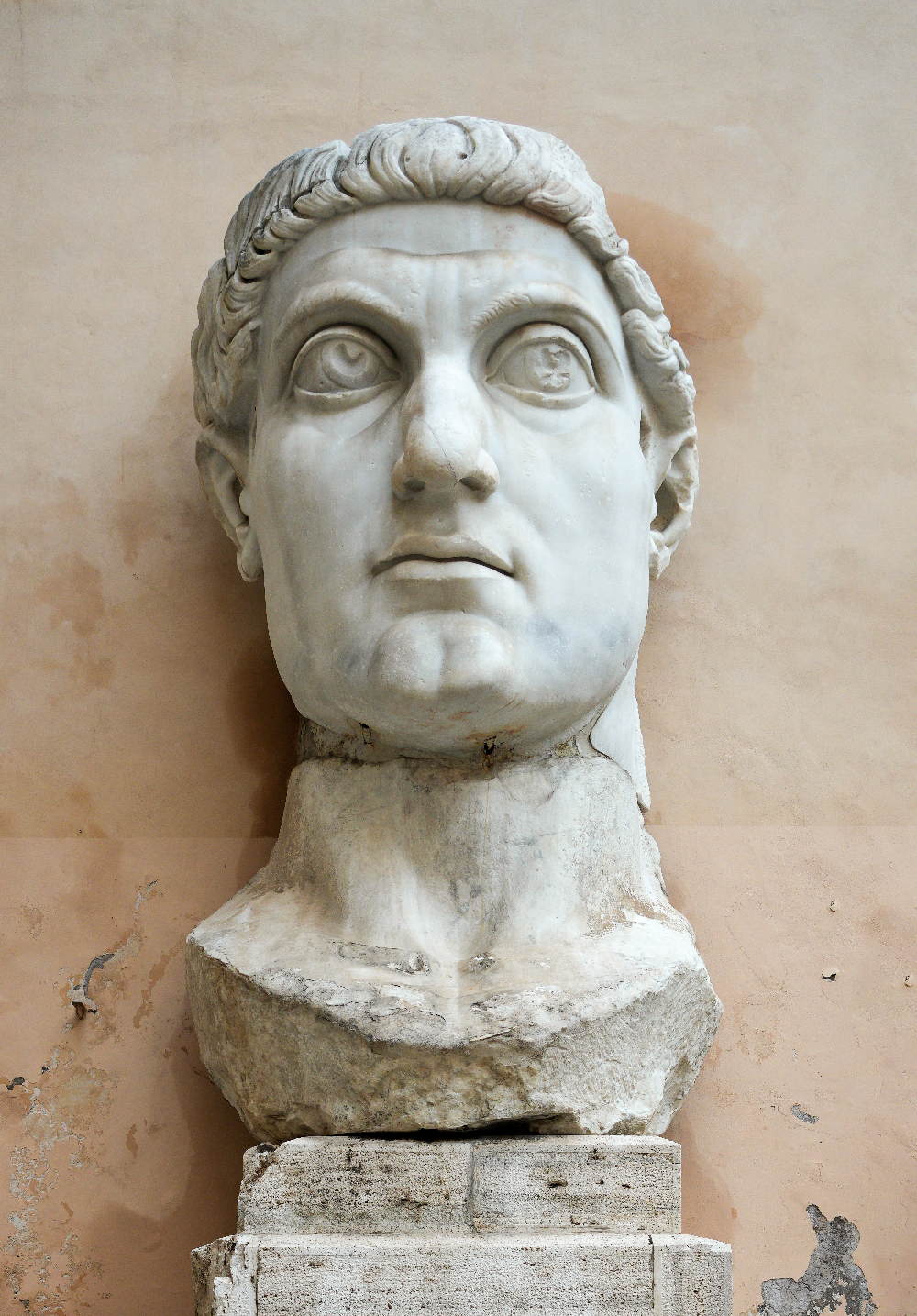
- To make essentially the same point from the opposite perspective, the initial advance of the Christian faith did not stem from intense study of or devotion to a written text. During the first few centuries of the Christian era, the overwhelming majority of persons living in the Roman Empire were illiterate. Further, the New Testament did not exist as a complete, coherent document until the middle of the fourth century—well after the Emperor Constantine and his successors had begun adopting a series of policies that eventually made Christianity the state religion of the Roman Empire.
- To rephrase this point from a slightly different perspective, it took over 300 years for committed Christians to evaluate and authenticate the exact list of 27 books that compose the New Testament, although a variety of devotional texts had been available in selected locations at much earlier stages.
- At the time when the New Testament really did become available, and for many centuries thereafter, conversion to Christianity was not predicated on systematic study. The fact that the Christian faith had become the state religion of the Roman Empire caused a very high proportion of the population “to go with the flow.” Further, the ranks of priests and bishops suffered a heavy infusion of time servers, opportunists, and careerists. This does not mean that all of them were insincere or that they were indifferent to the underlying religious values, just that material factors and other practical advantages caused a considerable number of human beings to seize the opportunity to benefit from imperial patronage and the government’s financial resources.
- After the western half of the Roman Empire ceased to exist in 476 CE, the conversion to Christianity of the tribes and ethnic groups that exercised authority over various segments of western Europe did not stem from personal persuasion or from evangelization in any sense that we would recognize. To the contrary, specific local chieftains, kinglets, and kings decided to convert, and these political decisions of theirs compelled their subjects to trail on after them.
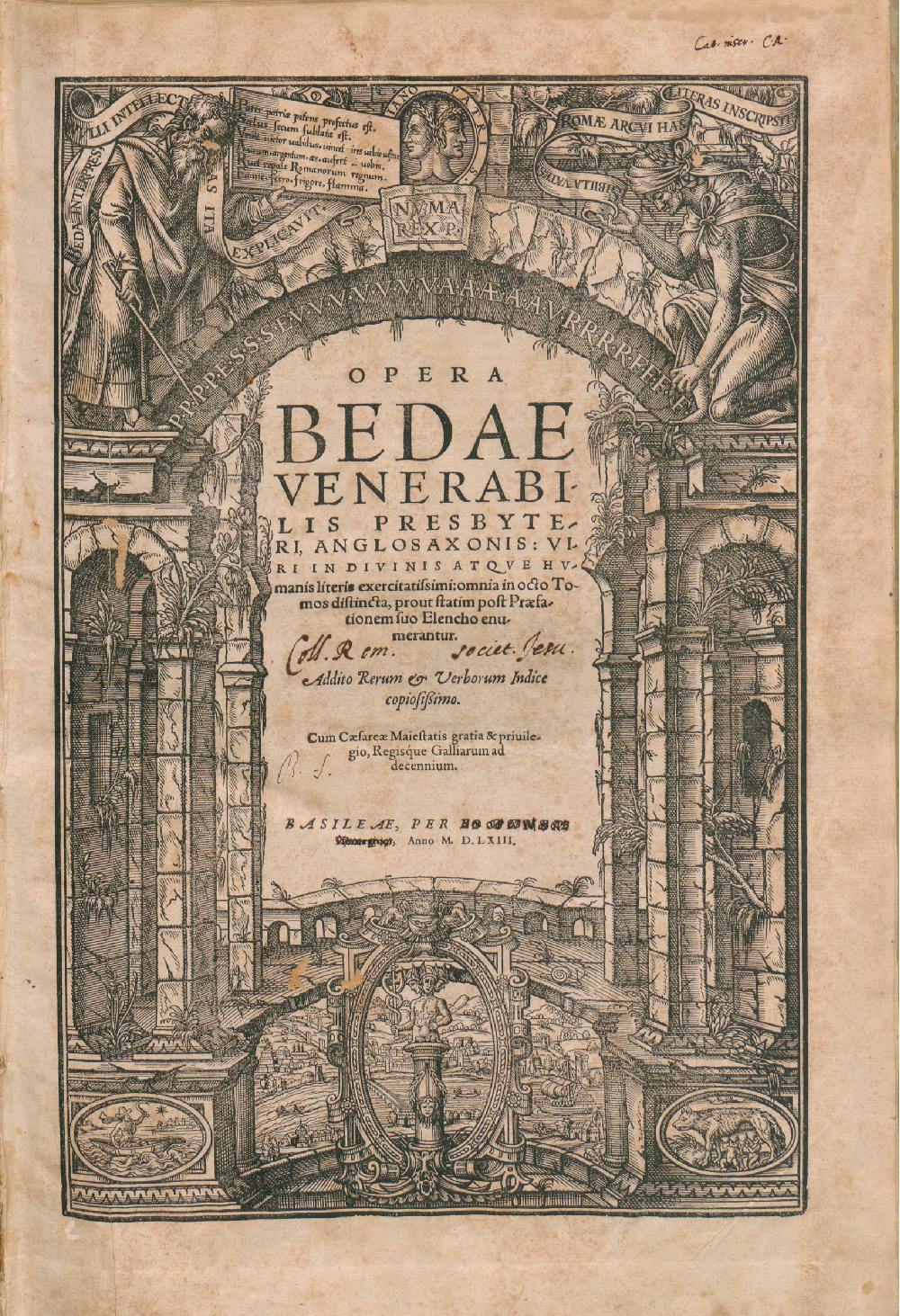
English People, 1563. Wikimedia Commons
- This general principle is illustrated by the story that the English monk Bede tells in Book II, Chapter 13 of his celebrated work The Ecclesiastical History of the English People. In the year 627 CE, King Edwin of Northumbria decided that Christianity would henceforth be the official religion for himself, for his court, and for all his people, thereby depriving all and sundry of any standing to dissent or take issue with his royal edict. (Although it is reasonable to believe that Bede embellished the story and invented many of the picturesque details, the crucial decision did occur, and the consequences were substantial and enduring.)
- In relation to western Europe as a whole, a considerably more influential event had occurred when Clovis was baptized in the year 496 CE. (Clovis, the chieftain of the Salian Franks, unified all the Franks and became their first king.)
- In effect, the baptism of Clovis initiated a long sequence of events that finally caused the pope to crown the Emperor Charlemagne in the year 800 CE. Around that year, Charlemagne’s troops conquered the pagan Saxons (persons living in the region of north central Germany that is still called Saxony), then converted them to Christianity by force of arms.
- Throughout the Middle Ages, the Christian faith was a matter of state policy, not individual choice. Anyone who dissented publicly was actively pursued and, if possible, persuaded to recant. In contrast, however, many persistent dissenters who refused to conform to the united dictates of church and state ended up being burned at the stake.
- As late as the Treaty of Westphalia1 (1648)—the treaty that ended the Thirty Years War in Germany and thereby ended the entire period of the wars of religion — the operating principle in regard to religion was expressed in the Latin phrase cuius regio ejus religio. In literal terms, this means “whose the rulership, his the religion.” If we prefer a more natural and more fluent translation, we can interpret the phrase to mean: “The religion of the ruler shall be the religion of the people.”
- For all the reasons noted above, the original tradition of Christianity featured the union of church and state, or at least a strong partnership involving duties and responsibilities that were interrelated and shared. The tolerance and pluralism that now prevail in the West descend from reforms that began in the 18th century, but they took approximately 100 years to be adopted in the great majority of countries having social and cultural backgrounds that are predominantly Christian.
- In effect, readers of The Urantia Book who have wished to apply the techniques of Christianity in order to promote and propagate the teachings of the fifth epochal revelation are approaching these questions very selectively and with a heavy dose of “presentitis,” especially since they have tended to focus almost exclusively on practices applied in North America during the last few centuries.
- Even if we were to disregard all of the above, the plain fact of the matter is that the evangelistic campaigns conducted in North America during the 19th and 20th centuries were heavily influenced by—and largely dependent on—a social and cultural environment that was predominantly Christian.
- This social and cultural environment is actually a net disadvantage for persons who wish to promote interest in the teachings of The Urantia Book, for the fifth epochal revelation includes many aspects disputing and contradicting conventional beliefs that are crucial to the Christian tradition. The atonement doctrine is the most obvious example, the idea that Jesus died on the cross to atone for our sins and appease the wrath of an angry Father.
- Further, persons who seek to promote the teachings of The Urantia Book cannot possibly offer the “deal” that has been a prominent selling point for advocates of Christianity for approximately 2,000 years: the claim that becoming a Christian and following traditional Christian teachings will enable the believer “to go to heaven,” whereas, as a corollary, someone who refuses to believe or who refuses to conform may be consigned to eternal punishment.
- In contrast, the revelators do not tell us that if someone accepts the teachings of The Urantia Book, this ensures that he or she will survive into the afterlife.
The net implications in our era
I realize that I may have tried your patience by subjecting you to a long series of remarks that are predominantly historical. Further, the implicitly “evangelistic” impulses that I have sought to rebut and overcome may be extinct now, and I hope they are. On the other hand, these impulses were not extinct in the 1980s. To the contrary, I believe they amounted to a subterranean factor that implicitly contributed to and catalyzed much of the friction between Urantia Foundation and Urantia Brotherhood during that decade.
Please permit me to conclude this part of our discussion by telling you quite explicitly where I end up: We, the readers of The Urantia Book, are operating on uncharted terrain; we cannot rely on or settle for techniques inherited from the traditions of spirituality and religion that have pervaded the Western world for most of the past two millennia.
After all, the horizons of the fifth epochal revelation include spirituality and religion, but they are certainly not limited to these realms. Further, the traditions of evangelism inherited from Christianity were aimed at promoting interest in a much simpler set of ideas, whereas delving deeply into the teachings of The Urantia Book and eventually embracing them with conviction and commitment requires far more time, effort, energy, and dedication. As stated on page 6 above, I believe that only an individual who is at least implicitly searching for more advanced levels of understanding and belief will be willing to embark on the extended and arduous quest for personal transformation.
I counsel patience and persistence, mainly continuing to rely on person-to-person contact and other techniques that are consensual and informal. This, of course, can and should include conferences, seminars, courses, study group meetings, and other types of voluntary gatherings, without resorting to mass-market advertising or other forms of publicity aimed at the general population.

In a memorandum dated January 19, 1955, William S. Sadler, Jr. offered recommendations that remain profoundly insightful:
A cultural chrysalis in relation to parochial and provincial thinking A chrysalis is an interesting thing. It acts as a sort of social or institutional incubator. The social grouping of the Forum served as a chrysalis for the ensuing Brotherhood. In a much larger sense Protestant Christianity serves as a chrysalis for the Urantia Papers. The function of a chrysalis appears to be inescapable, but the end products are not an unmixed blessing.
For example, Judaism served as a chrysalis for the gospel of Jesus. Without this chrysalis Jesus could not have taught. … But this chrysalis proved to be in some respects embarrassing, not only to the gospel, but even to Jesus himself. …
The present problem: We as a group in the Forum are nurtured in the teachings of Protestant Christianity:. And unless we make a determined effort to do otherwise, we are going to think in a parochial and in a provincial manner. …
I think we should make a sincere and prayerful effort to rise above the bias which is inherent in our backgrounds.
Urantia Foundation’s intent to convert itself into a global institution is a very positive sign, entirely in keeping with this advice from William S. Sadler, Jr. On balance, however, it is even more important that these intentions harmonize with and honor the inspiring obligations that are enshrined in Article 2.1 of the Declaration of Trust, the Principal Object:
2.1. PRINCIPAL OBJECT: The object for which this Foundation is created is the promotion, improvement, and expansion among the peoples of the world of the comprehension and understanding of Cosmology and the relation of the planet on which we live to the Universe, of the genesis and destiny of Man and his relation to God, and of the true teachings of Jesus Christ; and for the inculcation and encouragement of the realization and appreciation of the Fatherhood of God and the Brotherhood of Man — in order to increase and enhance the comfort, happiness, and well being of Man, as an individual and a member of society, through the fostering of a religion, a philosophy, and a cosmology which are commensurate with Man’s intellectual and cultural development.

NEAL WALDROP has studied The Urantia Book since November 1973. He served as a Trustee of Urantia Foundation from 1989 to 1992 and currently holds the courtesy title of Trustee Emeritus. Since 2004 he has fostered an innovative initiative modeled on the work of the master seraphim, an altruistic project aimed at promoting the progressive growth and development of society and civilization on our troubled planet Urantia (www.globalendeavor.net).