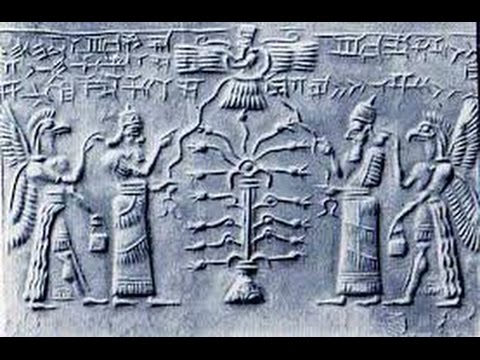
Judas, Joseph son of Caiaphas and Pilate are in the same league.
Preview: a read-only copy of the forum. To post or reply, use the current forum.
Judas Iscariot
39 posts · 5 participants · started Oct 12, 2026, 2:23 PM
What do you think? Did Judas repent for betraying Jesus?
I cannot discard the narrative of the Midwayers who provided Judas’ utterance, “I repent that I have done this; here is your money. I want to escape the guilt of this deed.” (186:1.4) And then I ask myself other questions for which I do not have answers. For example, if a person repents of betraying another person in an eyes-wide-open moment of realization of the deed, is that life changing? A forever thing? Imagine what Judas saw:
186:1.4 From a distance Judas saw them raise the cross piece with Jesus nailed thereon, and upon sight of this he rushed back to the temple and, forcing his way past the doorkeeper, found himself standing in the presence of the Sanhedrin, which was still in session. The betrayer was well-nigh breathless and highly distraught, but he managed to stammer out these words: “I have sinned in that I have betrayed innocent blood. You have insulted me. You have offered me as a reward for my service, money — the price of a slave. I repent that I have done this; here is your money. I want to escape the guilt of this deed.”
Can Judas be rehabilitated? He was a follower of John prior to Jesus. Doesn’t that inform us he had some proclivity toward God? If there was an inkling inside him toward God, I think he gets a second chance. He realized he had sinned. He was not iniquitous.
54:4.3 [Part II]The very fact that an evil-doing creature can actually choose to do wrong — commit sin — establishes the fact of free-willness and fully justifies any length delay in the execution of justice provided the extended mercy might conduce to repentance and rehabilitation.He was not like Lucifer. He was a human like us..Of the brigand who who died on cross near Jesus, they tell us:187:4.6 And if any other person among the jeering crowd had experienced the birth of faith within his soul and had appealed to the mercy of Jesus, he would have been received with the same loving consideration that was displayed toward the believing brigand.Judas, Joseph son of Caiaphas and Pilate are in the same league.
To my way of thinking Judas was not in the same league with Caiaphas or Pilate.
186:1.2 All of these Jews [members of the Sanhedrin] loathed Judas; they looked upon the betrayer with only feelings of utter contempt. Throughout the trial of Jesus before Caiaphas and during his appearance before Pilate, Judas was pricked in his conscience about his traitorous conduct. And he was also beginning to become somewhat disillusioned regarding the reward he was to receive as payment for his services as Jesus’ betrayer. He did not like the coolness and aloofness of the Jewish authorities; nevertheless, he expected to be liberally rewarded for his cowardly conduct. He anticipated being called before the full meeting of the Sanhedrin and there hearing himself eulogized while they conferred upon him suitable honors in token of the great service which he flattered himself he had rendered his nation. Imagine, therefore, the great surprise of this egotistic traitor when a servant of the high priest, tapping him on the shoulder, called him just outside the hall and said: “Judas, I have been appointed to pay you for the betrayal of Jesus. Here is your reward.” And thus speaking, the servant of Caiaphas handed Judas a bag containing thirty pieces of silver — the current price of a good, healthy slave.Judas was feeling something before he got his silver..Members of the Sanhedrin had their various reasons for doing away with Jesus.175:4.4 The Sadducees, who now controlled and dominated the Sanhedrin, were desirous of making away with Jesus for the following reasons:
175:4.5 1. They feared that the increased popular favor with which the multitude regarded him threatened to endanger the existence of the Jewish nation by possible involvement with the Roman authorities.
175:4.6 2. His zeal for temple reform struck directly at their revenues; the cleansing of the temple affected their pocketbooks.
175:4.7 3. They felt themselves responsible for the preservation of social order, and they feared the consequences of the further spread of Jesus’ strange and new doctrine of the brotherhood of man.
175:4.8 The Pharisees had different motives for wanting to see Jesus put to death. They feared him because:
175:4.9 1. He was arrayed in telling opposition to their traditional hold upon the people. The Pharisees were ultraconservative, and they bitterly resented these supposedly radical attacks upon their vested prestige as religious teachers.
175:4.10 2. They held that Jesus was a lawbreaker; that he had shown utter disregard for the Sabbath and numerous other legal and ceremonial requirements.
175:4.11 3. They charged him with blasphemy because he alluded to God as his Father.
175:4.12 4. And now were they thoroughly angry with him because of his last discourse of bitter denunciation which he had this day delivered in the temple as the concluding portion of his farewell address.
175:4.13 The Sanhedrin, having formally decreed the death of Jesus and having issued orders for his arrest, adjourned on this Tuesday near midnight, after appointing to meet at ten o’clock the next morning at the home of Caiaphas the high priest for the purpose of formulating the charges on which Jesus should be brought to trial.
175:4.14 A small group of the Sadducees had actually proposed to dispose of Jesus by assassination, but the Pharisees utterly refused to countenance such a procedure.
175:4.15 And this was the situation in Jerusalem and among men on this eventful day while a vast concourse of celestial beings hovered over this momentous scene on earth, anxious to do something to assist their beloved Sovereign but powerless to act because they were effectively restrained by their commanding superiors.
Imagine Peter in the courtyard of the palace of Annas on Mount Olivet.
184:2.11 Until the crowing of the cock brought Peter to his better senses, he had only thought, as he walked up and down the porch to keep warm, how cleverly he had eluded the accusations of the servants, and how he had frustrated their purpose to identify him with Jesus. For the time being, he had only considered that these servants had no moral or legal right thus to question him, and he really congratulated himself over the manner in which he thought he had avoided being identified and possibly subjected to arrest and imprisonment. Not until the cock crowed did it occur to Peter that he had denied his Master. Not until Jesus looked upon him, did he realize that he had failed to live up to his privileges as an ambassador of the kingdom.Jesus did look at him, as the guards led him out.184:2.8 [. . .] As he stood there, heavy of heart and crushed with the sense of guilt, the palace doors opened, and the guards led Jesus past on the way to Caiaphas. As the Master passed Peter, he saw, by the light of the torches, the look of despair on the face of his former self-confident and superficially brave apostle, and he turned and looked upon Peter. Peter never forgot that look as long as he lived. It was such a glance of commingled pity and love as mortal man had never beheld in the face of the Master.Heart-wrenching.What do you think? Did Judas repent for betraying Jesus?
I cannot discard the narrative of the Midwayers who provided Judas’ utterance, “I repent that I have done this; here is your money. I want to escape the guilt of this deed.” (186:1.4) And then I ask myself other questions for which I do not have answers. For example, if a person repents of betraying another person in an eyes-wide-open moment of realization of the deed, is that life changing? A forever thing? Imagine what Judas saw:
186:1.4 From a distance Judas saw them raise the cross piece with Jesus nailed thereon, and upon sight of this he rushed back to the temple and, forcing his way past the doorkeeper, found himself standing in the presence of the Sanhedrin, which was still in session. The betrayer was well-nigh breathless and highly distraught, but he managed to stammer out these words: “I have sinned in that I have betrayed innocent blood. You have insulted me. You have offered me as a reward for my service, money — the price of a slave. I repent that I have done this; here is your money. I want to escape the guilt of this deed.”
Can Judas be rehabilitated? He was a follower of John prior to Jesus. Doesn’t that inform us he had some proclivity toward God? If there was an inkling inside him toward God, I think he gets a second chance. He realized he had sinned. He was not iniquitous.
54:4.3 [Part II]The very fact that an evil-doing creature can actually choose to do wrong — commit sin — establishes the fact of free-willness and fully justifies any length delay in the execution of justice provided the extended mercy might conduce to repentance and rehabilitation.He was not like Lucifer. He was a human like us..Of the brigand who who died on cross near Jesus, they tell us:187:4.6 And if any other person among the jeering crowd had experienced the birth of faith within his soul and had appealed to the mercy of Jesus, he would have been received with the same loving consideration that was displayed toward the believing brigand.I agree with everything you’re inferring. I do believe that Judas can be rehabilitated.The reason why I believe that, is because from a parent’s standpoint every child is valuable. Making mistakes is how a child learns to not make mistakes. And I cannot see a good parent avoid going to great lengths in waiting for a child to grow up. Slamming the door on them isn’t what they do.Do you think Judas’s downfall could have been prevented?
Do you think Judas’s downfall could have been prevented?
Yes, I do believe Judas’s downfall could have been prevented. But in reading section 4 of paper 193 “Causes of Judas’s Downfall”
https://www.urantia.org/urantia-book-standardized/paper-193-final-appearances-and-ascension#U193_4_0
it would have taken something extraordinary to have acted as a catalyst for him to change a lot of things about his attitude and the way he tended to think. And apparently, it didn’t happen. Even the presence of Jesus in his life wasn’t enough. Which is kind of mind-blowing and makes me wonder why…
a well-meaning and otherwise onetime sincere believer in Jesus, even after several years of intimate association with his transforming personality, [would forsake] his fellows, repudiate a sacred cause, renounce his holy calling, and betray his divine Master.
My wife, Monday through Friday, babysits our 2-year-old grandson in the mornings and I’ve had the pleasure of being able to observe him as he grows up. Jesus referring to the attitude of a child, always intrigued me. And what I see is teaching me a lot.
So is that what it boils down to? Having a set of life’s circumstances that either promotes an ability to prevent oneself from falling down or not? Seems to me that generally, that’s the way things happen. It’s either a good situation or a bad one.
But that leads me back to the question of can Judas or anyone else who shares his experience be rehabilitated? Can they be fixed? Can they be saved?
With a willingness to struggle through all that has to be endured, I believe they can. And if successful, might be something of an unusual accomplishment that cannot be achieved any other way except by first falling hard on one’s face that somewhere down the line ends up being of enormous value in the universe.
I don’t know. But I hope so.
May I share an idea?
We are informed that divine love is tops , whatever word you choose, supreme or more, and recall the Father’s invitation to be perfect, I now realize anyone who is passed up to the Mansions will be given every teaching needed for progressing upward to perfection, if we cooperate and do not reject. Think about that.
All the teachers and ministers know of the Father’s ascension scheme and all effort possible will be offered to rehabilitate any of us, including Judas!!!!Isn’t that marvelous for Judas?
Consider all other nasty humans who committed despicable crimes and still had a “flicker” of faith. We are told the Gods would not want to lose even one soul !!!!
Without absolute rejection, the Judges likely will pass upward any soul that might be salvable!!!!
This says to us we shall not judge others.
One more point: the teachings we will receive likely will be extensive forgiveness lessons to forget errors and to progress towards the Father’s eternal service after Finality. The beauties thereof we cannot now fully imagine. We should learn those lessons now as best we can. If not now, then try to forget Judas’ error before our personal Mansonia experience is completed. The Father’s plan for each Ascender is bigger than we can imagine.
More could be said but you get the point!
BTW, speaking of big, see my YouTube video at
to help people know Jesus better.
But in reading section 4 of paper 193 “Causes of Judas’s Downfall”…
…as follows:
193:4.4 Judas met defeat in his battles of the earth struggle because of the following factors of personal tendencies and character weakness:
1. He was an isolated type of human being. He was highly individualistic and chose to grow into a confirmed “shut-in” and unsociable sort of person.
2. As a child, life had been made too easy for him. He bitterly resented thwarting. He always expected to win; he was a very poor loser.
3. He never acquired a philosophic technique for meeting disappointment. Instead of accepting disappointments as a regular and commonplace feature of human existence, he unfailingly resorted to the practice of blaming someone in particular, or his associates as a group, for all his personal difficulties and disappointments.
4. He was given to holding grudges; he was always entertaining the idea of revenge.
5. He did not like to face facts frankly; he was dishonest in his attitude toward life situations.
6. He disliked to discuss his personal problems with his immediate associates; he refused to talk over his difficulties with his real friends and those who truly loved him. In all the years of their association he never once went to the Master with a purely personal problem.
7. He never learned that the real rewards for noble living are, after all, spiritual prizes, which are not always distributed during this one short life in the flesh.
193:4.12 As a result of his persistent isolation of personality, his griefs multiplied, his sorrows increased, his anxieties augmented, and his despair deepened almost beyond endurance.
193:4.13 While this self-centered and ultraindividualistic apostle had many psychic, emotional, and spiritual troubles, his main difficulties were: In personality, he was isolated. In mind, he was suspicious and vengeful. In temperament, he was surly and vindictive. Emotionally, he was loveless and unforgiving. Socially, he was unconfiding and almost wholly self-contained. In spirit, he became arrogant and selfishly ambitious. In life, he ignored those who loved him, and in death, he was friendless.
193:4.14 These, then, are the factors of mind and influences of evil which, taken altogether, explain why a well-meaning and otherwise onetime sincere believer in Jesus, even after several years of intimate association with his transforming personality, forsook his fellows, repudiated a sacred cause, renounced his holy calling, and betrayed his divine Master.
The thing that stands out to me was his lack of confiding trust in others. Apparently he didn’t have friends. He preferred to be isolated.
- The thing that stands out to me was his lack of confiding trust in others. Apparently he didn’t have friends. He preferred to be isolated.
Yeah that struck me too. I believe they told us he was an only child who was pampered and spoiled. Stuff like that always leads me to think about the statement that…
48:7.14 (556.14) 12. The greatest affliction of the cosmos is never to have been afflicted. Mortals only learn wisdom by experiencing tribulation.
But nonetheless, in my opinion, parents aren’t responsible. How many others have experienced the very same situation and didn’t end up in a downfall the way Judas did? Not having friends and not confiding in others is kind of asking for it. Very strange.
How many others have experienced the very same situation and didn’t end up in a downfall the way Judas did?
Thomas was one who struggled.
139:8.3 The early home life of Thomas had been unfortunate; his parents were not altogether happy in their married life, and this was reflected in Thomas’s adult experience. He grew up having a very disagreeable and quarrelsome disposition. Even his wife was glad to see him join the apostles; she was relieved by the thought that her pessimistic husband would be away from home most of the time. Thomas also had a streak of suspicion which made it very difficult to get along peaceably with him. Peter was very much upset by Thomas at first, complaining to his brother, Andrew, that Thomas was “mean, ugly, and always suspicious.” But the better his associates knew Thomas, the more they liked him. They found he was superbly honest and unflinchingly loyal. He was perfectly sincere and unquestionably truthful, but he was a natural-born faultfinder and had grown up to become a real pessimist. His analytical mind had become cursed with suspicion. He was rapidly losing faith in his fellow men when he became associated with the twelve and thus came in contact with the noble character of Jesus. This association with the Master began at once to transform Thomas’s whole disposition and to effect great changes in his mental reactions to his fellow men.Furthermore,193:4.3 […] That Judas need not have gone wrong is well proved by the cases of Thomas and Nathaniel, both of whom were cursed with this same sort of suspicion and overdevelopment of the individualistic tendency. Even Andrew and Matthew had many leanings in this direction; but all these men grew to love Jesus and their fellow apostles more, and not less, as time passed. They grew in grace and in a knowledge of the truth. They became increasingly more trustful of their brethren and slowly developed the ability to confide in their fellows. Judas persistently refused to confide in his brethren. When he was impelled, by the accumulation of his emotional conflicts, to seek relief in self-expression, he invariably sought the advice and received the unwise consolation of his unspiritual relatives or those chance acquaintances who were either indifferent, or actually hostile, to the welfare and progress of the spiritual realities of the heavenly kingdom, of which he was one of the twelve consecrated ambassadors on earth.That Judas need not have gone wrong is telling. He had choices.True. Judas had choices. And his choices cost this world and others. He is the last person I would expect to have repented, next to Caiaphas.
True. Judas had choices. And his choices cost this world and others. He is the last person I would expect to have repented, next to Caiaphas.
Whether or not someone truly repents is hard to judge. But with the first part of your statement, I agree, the worlds have paid an unusually high cost. But interestingly, if not paradoxically, I think what was paid for opened the door to an opportunity had no other way.
22:2.3 (245.3) Every ascendant mortal of insurrectionary experience who functions loyally in the face of rebellion is eventually destined to become a Mighty Messenger of the superuniverse service.
https://www.urantia.org/urantia-book-standardized/paper-22-trinitized-sons-god#U22_2_0
True. Judas had choices. And his choices cost this world and others. He is the last person I would expect to have repented, next to Caiaphas.
As I recall, the betrayal by Judas had little or nothing to do with the crucifixion of Jesus. The warrant for arrest and the bogus trial and outcome were predetermined regardless of Judas.
Jesus knew, even before Palm Sunday’s grand entrance, of the trajectory and probability of his assassination/execution/murder. I believe Pilate was the only chance for any different outcome.
Judas was a pawn used by a determined power structure with a predetermined agenda and entrenched outcome in full momentum. Judas is such a pitiful character with little influence or contribution to the result.
Jesus even made the presence of Judas irrelevant in the Garden by stepping out to greet the Roman Guard. Pathetic and pointless both.
I think the consequences of the disloyalty and betrayal by Judas were pretty personal and on his own mind and heart, wracked by guilt and remorse.
I believe that Judas himself and the other Apostles were the greatest victims of his betrayal. I am certain the Master was most disappointed and saddened and felt helpless by such choices of resentment and foolishness and disloyalty.
"Live loyally today—grow—and tomorrow will attend to itself. The quickest way for a tadpole to become a frog is to live loyally each moment as a tadpole."
I believe Pilate was the only chance for any different outcome.
I want to look more deeply into this. For background Pontius Pilate was a Roman official who did not live in Jerusalem. He served as the fifth Roman prefect (governor) of the province of Judaea from roughly 26 to 36 CE. Palestine was under Roman rule since 63 BCE. [Info obtained from AI]
136:2.8 (Jesus was almost thirty-one and one-half years old when he was baptized. While Luke says that Jesus was baptized in the fifteenth year of the reign of Tiberius Caesar, which would be A.D. 29 since Augustus died in A.D. 14, it should be recalled that Tiberius was coemperor with Augustus for two and one-half years before the death of Augustus, having had coins struck in his honor in October, A.D. 11. The fifteenth year of his actual rule was, therefore, this very year of A.D. 26, that of Jesus’ baptism. And this was also the year that Pontius Pilate began his rule as governor of Judea.)185:1.1 If Pontius Pilate had not been a reasonably good governor of the minor provinces, Tiberius would hardly have suffered him to remain as procurator of Judea for ten years. Although he was a fairly good administrator, he was a moral coward. He was not a big enough man to comprehend the nature of his task as governor of the Jews. He failed to grasp the fact that these Hebrews had a real religion, a faith for which they were willing to die, and that millions upon millions of them, scattered here and there throughout the empire, looked to Jerusalem as the shrine of their faith and held the Sanhedrin in respect as the highest tribunal on earth..185:1.2 Pilate did not love the Jews, and this deep-seated hatred early began to manifest itself. Of all the Roman provinces, none was more difficult to govern than Judea. Pilate never really understood the problems involved in the management of the Jews and, therefore, very early in his experience as governor, made a series of almost fatal and well-nigh suicidal blunders. And it was these blunders that gave the Jews such power over him. When they wanted to influence his decisions, all they had to do was to threaten an uprising, and Pilate would speedily capitulate. And this apparent vacillation, or lack of moral courage, of the procurator was chiefly due to the memory of a number of controversies he had had with the Jews and because in each instance they had worsted him. The Jews knew that Pilate was afraid of them, that he feared for his position before Tiberius, and they employed this knowledge to the great disadvantage of the governor on numerous occasions..185:1.3 Pilate’s disfavor with the Jews came about as a result of a number of unfortunate encounters. First, he failed to take seriously their deep-seated prejudice against all images as symbols of idol worship. Therefore he permitted his soldiers to enter Jerusalem without removing the images of Caesar from their banners, as had been the practice of the Roman soldiers under his predecessor. A large deputation of Jews waited upon Pilate for five days, imploring him to have these images removed from the military standards. He flatly refused to grant their petition and threatened them with instant death. Pilate, himself being a skeptic, did not understand that men of strong religious feelings will not hesitate to die for their religious convictions; and therefore was he dismayed when these Jews drew themselves up defiantly before his palace, bowed their faces to the ground, and sent word that they were ready to die. Pilate then realized that he had made a threat which he was unwilling to carry out. He surrendered, ordered the images removed from the standards of his soldiers in Jerusalem, and found himself from that day on to a large extent subject to the whims of the Jewish leaders, who had in this way discovered his weakness in making threats which he feared to execute..185:1.4 Pilate subsequently determined to regain this lost prestige and accordingly had the shields of the emperor, such as were commonly used in Caesar worship, put up on the walls of Herod’s palace in Jerusalem. When the Jews protested, he was adamant. When he refused to listen to their protests, they promptly appealed to Rome, and the emperor as promptly ordered the offending shields removed. And then was Pilate held in even lower esteem than before..185:1.5 Another thing which brought him into great disfavor with the Jews was that he dared to take money from the temple treasury to pay for the construction of a new aqueduct to provide increased water supply for the millions of visitors to Jerusalem at the times of the great religious feasts. The Jews held that only the Sanhedrin could disburse the temple funds, and they never ceased to inveigh against Pilate for this presumptuous ruling. No less than a score of riots and much bloodshed resulted from this decision. The last of these serious outbreaks had to do with the slaughter of a large company of Galileans even as they worshiped at the altar..185:1.6 It is significant that, while this vacillating Roman ruler sacrificed Jesus to his fear of the Jews and to safeguard his personal position, he finally was deposed as a result of the needless slaughter of Samaritans in connection with the pretensions of a false Messiah who led troops to Mount Gerizim, where he claimed the temple vessels were buried; and fierce riots broke out when he failed to reveal the hiding place of the sacred vessels, as he had promised. As a result of this episode, the legatus of Syria ordered Pilate to Rome. Tiberius died while Pilate was on the way to Rome, and he was not reappointed as procurator of Judea. He never fully recovered from the regretful condemnation of having consented to the crucifixion of Jesus. Finding no favor in the eyes of the new emperor, he retired to the province of Lausanne, where he subsequently committed suicide.[. . .]185:1.8 And all this explains much that transpired on this tragic Friday forenoon. It is easy to understand why the Jews presumed to dictate to Pilate — to get him up at six o’clock to try Jesus — and also why they did not hesitate to threaten to charge him with treason before the emperor if he dared to refuse their demands for Jesus’ death..185:1.9 A worthy Roman governor who had not become disadvantageously involved with the rulers of the Jews would never have permitted these bloodthirsty religious fanatics to bring about the death of a man whom he himself had declared to be innocent of their false charges and without fault. Rome made a great blunder, a far-reaching error in earthly affairs, when she sent the second-rate Pilate to govern Palestine. Tiberius had better have sent to the Jews the best provincial administrator in the empire.Rome didn’t understand religious fanaticism. Caiaphas, among others, was a religious fanatic. Pilate failed to realize the Hebrews had a real religion, a faith for which they were willing to die.175:2.1 The fact that the spiritual leaders and the religious teachers of the Jewish nation onetime rejected the teachings of Jesus and conspired to bring about his cruel death, does not in any manner affect the status of any individual Jew in his standing before God. And it should not cause those who profess to be followers of the Christ to be prejudiced against the Jew as a fellow mortal. The Jews, as a nation, as a sociopolitical group, paid in full the terrible price of rejecting the Prince of Peace. Long since they ceased to be the spiritual torchbearers of divine truth to the races of mankind, but this constitutes no valid reason why the individual descendants of these long-ago Jews should be made to suffer the persecutions which have been visited upon them by intolerant, unworthy, and bigoted professed followers of Jesus of Nazareth, who was, himself, a Jew by natural birth.This topic of Judas is more significant than we think. Need for revenge, hate, repentance, forgiveness… When I attempt to wear Michael’s shoes and put myself in his situation that bad night, I imagine myself stomping Judas’ head into the ground. What was/is it about Michael that made him so merciful even in the face of mockery and humiliation? How can a mere human achieve that level of sublimity of character?
I imagine there’s a course for mortals from Urantia involving the study of Judas in the Mansion worlds. Expressing genuine feelings about that traitor gives such a course an opportunity to make an impact.
What was/is it about Michael that made him so merciful even in the face of mockery and humiliation? How can a mere human achieve that level of sublimity of character?
I apprecite your questions. I think about the inconceivable stretch of time encompassing the history of Urantia. In the scheme of things Adam and Eve are relatively recent, and Michael’s seventh bestowal is but an arm’s length away. The UB is in front of our eyes, thank God, and thank God it is such an amazing resource where we can read this. . .
100:7.1 Although the average mortal of Urantia cannot hope to attain the high perfection of character which Jesus of Nazareth acquired while sojourning in the flesh, it is altogether possible for every mortal believer to develop a strong and unified personality along the perfected lines of the Jesus personality. The unique feature of the Master’s personality was not so much its perfection as its symmetry, its exquisite and balanced unification. The most effective presentation of Jesus consists in following the example of the one who said, as he gestured toward the Master standing before his accusers, “Behold the man!”129:4.7 [Part IV]And this was his true and supreme purpose. He did not come down to live on Urantia as the perfect and detailed example for any child or adult, any man or woman, in that age or any other. True it is, indeed, that in his full, rich, beautiful, and noble life we may all find much that is exquisitely exemplary, divinely inspiring, but this is because he lived a true and genuinely human life. Jesus did not live his life on earth in order to set an example for all other human beings to copy. He lived this life in the flesh by the same mercy ministry that you all may live your lives on earth; and as he lived his mortal life in his day and as he was, so did he thereby set the example for all of us thus to live our lives in our day and as we are. You may not aspire to live his life, but you can resolve to live your lives even as, and by the same means that, he lived his. Jesus may not be the technical and detailed example for all the mortals of all ages on all the realms of this local universe, but he is everlastingly the inspiration and guide of all Paradise pilgrims from the worlds of initial ascension up through a universe of universes and on through Havona to Paradise. Jesus is the new and living way from man to God, from the partial to the perfect, from the earthly to the heavenly, from time to eternity.- [Note – I didn’t try to upload any files.]
- I’m beginning to think that repentance is not necessarily a one time thing. A person can repent and then backslide, even repeatedly. I’m sure there is an explanation somewhere for suicide, God knows. Judas did it. Pilate did it. Somehow a person can’t live with him/herself. Eventually, elsewhere, there’s going to be a reckoning, an accounting, an opportunity for rehabilitation, even for backsliders.112:5.7 If ever there is doubt as to the advisability of advancing a human identity to the mansion worlds, the universe governments invariably rule in the personal interests of that individual; they unhesitatingly advance such a soul to the status of a transitional being, while they continue their observations of the emerging morontia intent and spiritual purpose. Thus divine justice is certain of achievement, and divine mercy is accorded further opportunity for extending its ministry..176:3.8 In the next world you will be asked to give an account of the endowments and stewardships of this world. Whether inherent talents are few or many, a just and merciful reckoning must be faced. If endowments are used only in selfish pursuits and no thought is bestowed upon the higher duty of obtaining increased yield of the fruits of the spirit, as they are manifested in the ever-expanding service of men and the worship of God, such selfish stewards must accept the consequences of their deliberate choosing.wiffinz wrote: I imagine there’s a course for mortals from Urantia involving the study of Judas in the Mansion worlds. Expressing genuine feelings about that traitor gives such a course an opportunity to make an impact..Perhaps so.